
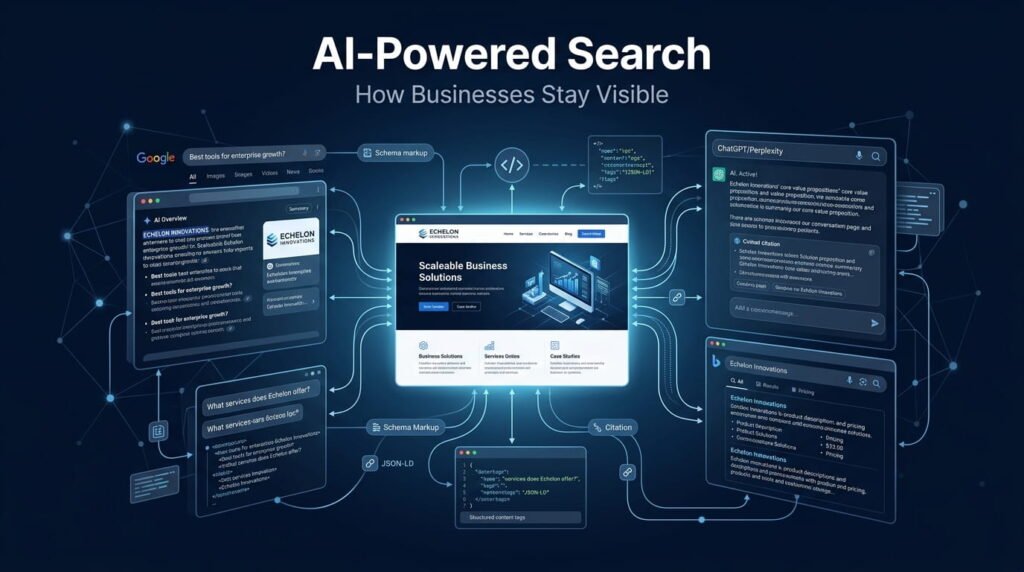
Search is changing faster than it has in two decades. Tools like ChatGPT Search, Google’s AI Overviews, Perplexity, and Bing Copilot no longer just list ten blue links they read, synthesize, and answer questions directly. For businesses, this means the old rules of SEO are no longer enough. If your website isn’t structured for AI to understand, summarize, and trust, you risk becoming invisible in the answers these tools generate.
Here’s how businesses can adapt their websites to stay visible and relevant in this new era of AI-powered search.
1. Focus on Clear, Structured Content
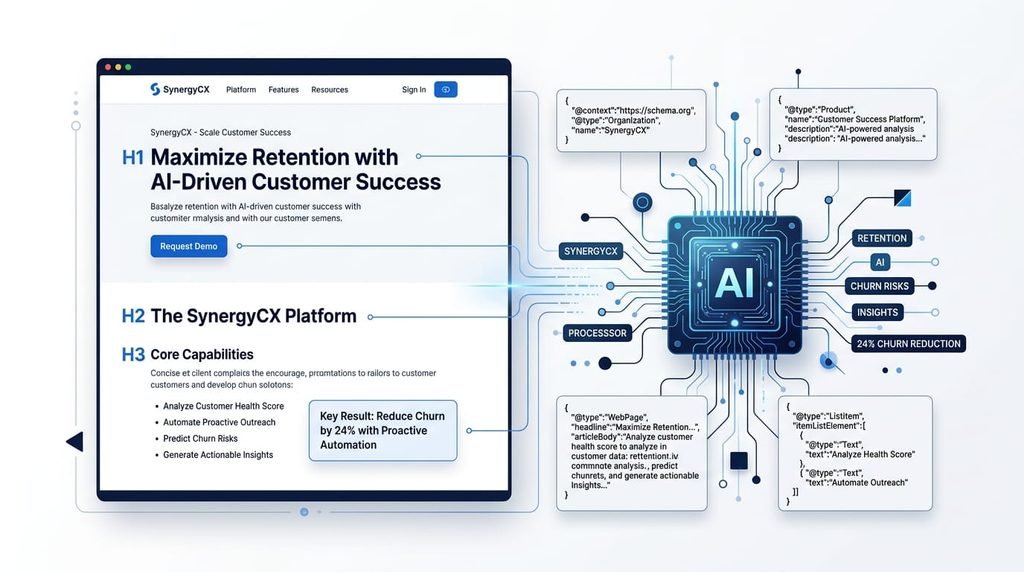
AI search tools scan content to extract facts, not just keywords. Pages that are well-organized with clear headings, short paragraphs, and direct answers near the top perform better because AI models can pull information out of them easily.
- Use descriptive H1, H2, and H3 headings that reflect real questions people ask.
- Answer the core question in the first 1–2 sentences of a section, then expand with detail.
- Break up long blocks of text with bullet points, tables, and numbered steps.
2. Use Structured Data and Schema Markup
Schema markup (JSON-LD) helps AI systems understand what your content means, not just what it says. Adding structured data for products, FAQs, articles, reviews, and business information gives AI crawlers a machine-readable map of your site.
Priority schema types for most businesses:
- Organization and Local Business schema
- Product and Offer schema (for e-commerce)
- FAQ Page and How To schema
- Article and Author schema (for blogs and guides)
3. Build Topical Authority, Not Just Keyword Pages
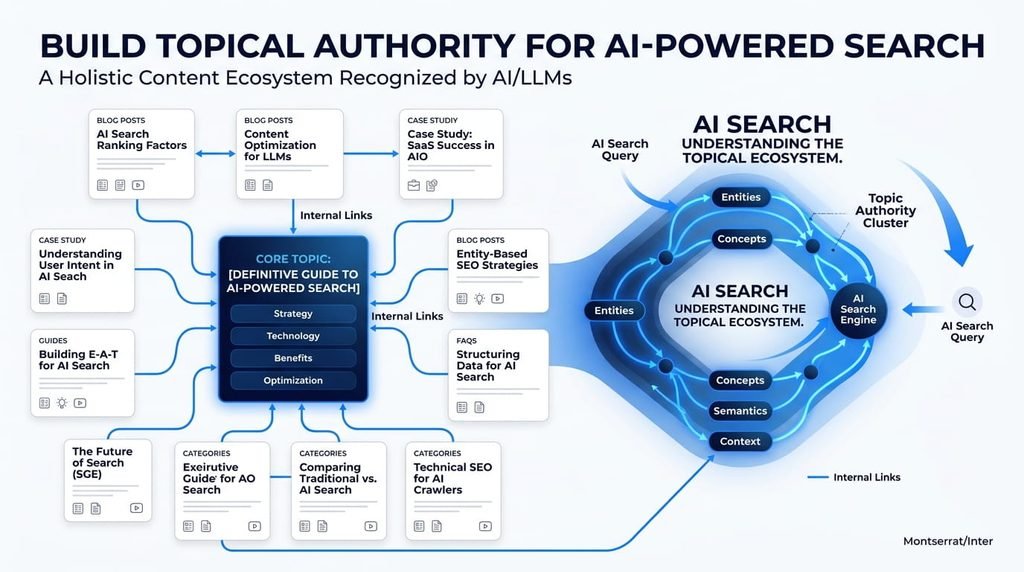
AI models favor sources that demonstrate depth on a subject. Instead of scattering thin pages targeting individual keywords, build clusters of interlinked content around core topics your business is known for. This signals expertise and makes it easier for AI to cite your site as an authority.
- Create a central “pillar” page for each major topic.
- Link supporting articles back to that pillar page.
- Keep content updated AI tools tend to favor fresh, accurate information.
4. Make Your Content Easy to Crawl and Extract
Many AI search tools rely on crawlers similar to traditional search bots (e.g., GPT Bot, Google-Extended, Perplexity Bot). If your site blocks these crawlers or relies heavily on JavaScript-rendered content that isn’t crawlable, your content may never reach the AI’s index.
- Check your robots.txt file and decide deliberately whether to allow AI crawlers.
- Ensure key content is available in the initial HTML, not only rendered client-side via JavaScript.
- Keep page load times fast, slow or broken pages get deprioritized.
5. Answer Questions Directly (Conversational Intent)
People increasingly search using full questions rather than short keywords “What’s the best CRM for a small consulting firm?” instead of “best CRM.” Your content should mirror this conversational style.
- Add an FAQ section addressing real customer questions.
- Write in a natural, explanatory tone rather than keyword-stuffed copy.
- Anticipate follow-up questions and answer them within the same page.
6. Strengthen E-E-A-T Signals (Experience, Expertise, Authoritativeness, Trust)
AI systems are cautious about citing unreliable sources, especially for topics involving money, health, or safety. Demonstrating credibility increases the odds your content gets referenced.
- Include author bios with real credentials.
- Cite sources and data where relevant.
- Keep contact information, business details, and policies easy to find.
- Collect and display genuine customer reviews.

7. Optimize for Multiple AI Platforms, Not Just Google
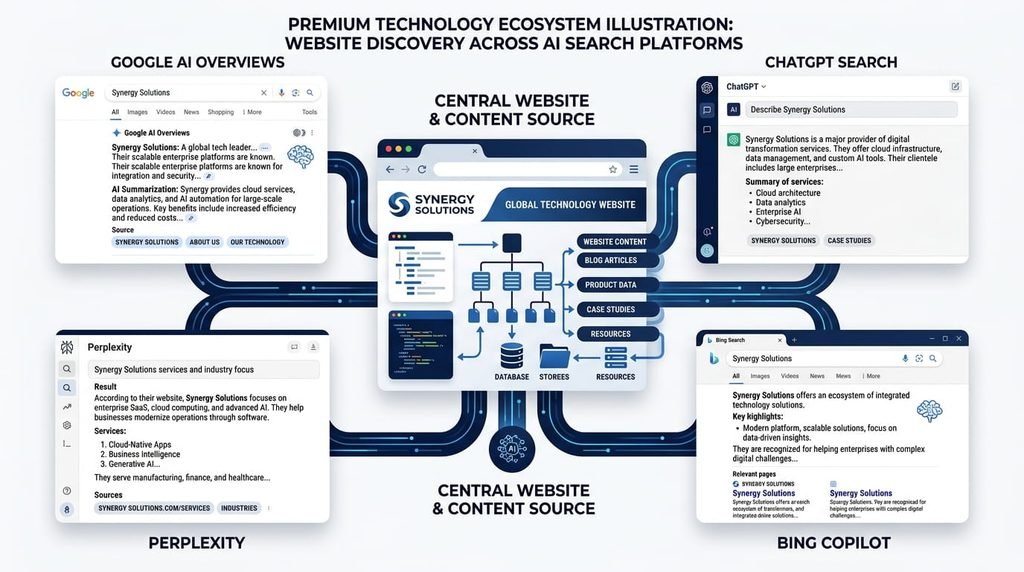
Unlike traditional SEO, AI search optimization now spans several platforms Google AI Overviews, Bing Copilot, ChatGPT Search, Perplexity, and others each with slightly different crawling and ranking behavior. Businesses should monitor how their brand appears across all of these, not just in classic Google search results.
- Search your own brand and products inside ChatGPT, Perplexity, and Copilot periodically.
- Note which competitors get cited and study why.
- Adjust content based on gaps you find.
8. Keep Core Business Information Consistent Everywhere
AI models often cross-reference multiple sources to verify facts. Inconsistent business names, addresses, pricing, or product details across your website, Google Business Profile, and third-party listings can hurt trust and accuracy.
- Audit your NAP (Name, Address, Phone) consistency across platforms.
- Keep pricing and product specs synced between your website and marketplaces.
- Update outdated pages instead of leaving stale content live.

Final Thoughts
AI-powered search rewards clarity, structure, and trustworthiness over keyword tricks. Businesses that invest now in clean content architecture, structured data, and genuinely useful answers will be far more likely to show up and get cited as AI becomes the front door to information for more and more users.
The shift isn’t about abandoning SEO fundamentals; it’s about layering AI-readiness on top of them. The businesses that adapt early will have a real advantage before this becomes standard practice for everyone.