

The SaaS industry is entering a very different phase in 2026.
For years, SaaS companies competed on features, integrations, pricing tiers, and user experience. Those factors still matter, but they are no longer enough. Artificial intelligence is changing how software is built, how users interact with products, how companies charge customers, and even how buyers discover software.
AI agents are becoming capable of performing multi-step tasks instead of simply answering questions. At the same time, SaaS companies are experimenting with usage-based and outcome-based pricing because AI workloads do not always fit traditional per-seat subscriptions. Security, governance, vertical specialization, and measurable business outcomes are also becoming more important.
For SaaS businesses, the message is simple: 2026 is not about adding AI because everyone else is doing it. It is about building software that creates measurable value faster, more intelligently, and more securely.
Here are nine SaaS trends that deserve serious attention in 2026.
1. AI-Native SaaS Is Replacing AI as an Add-On
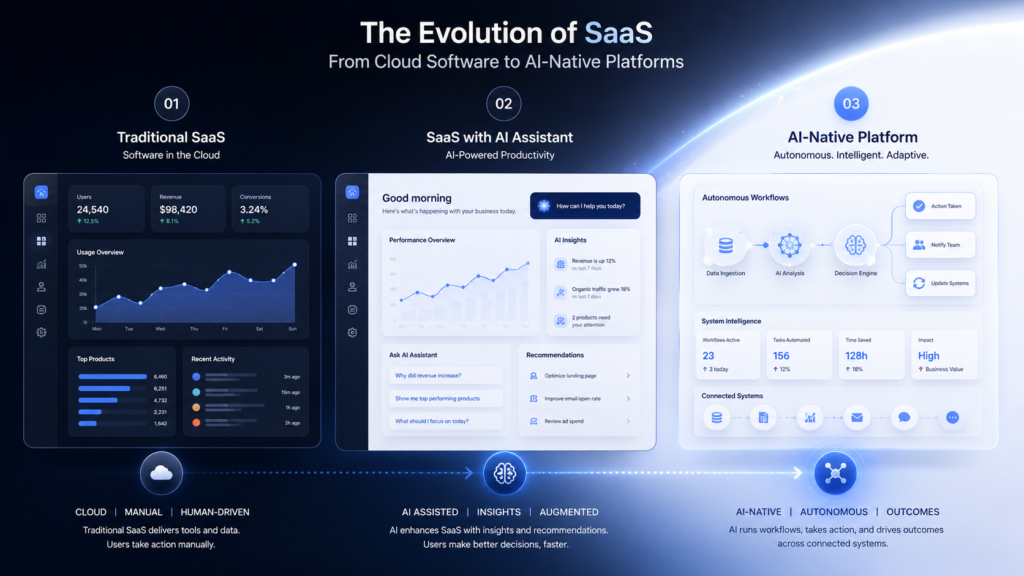
One of the biggest changes in SaaS is the move from traditional software with an AI feature to software designed around AI from the beginning.
Previously, a SaaS company might add an AI writing assistant, chatbot, recommendation engine, or automated reporting feature to an existing platform.
That approach is changing.
AI is increasingly becoming part of the core architecture and workflow of SaaS products. Instead of simply helping users complete individual tasks, AI can now coordinate multiple steps, analyze information, make recommendations, and trigger actions.
This creates a fundamental difference between:
- SaaS with an AI feature
- AI-powered SaaS
- AI-native SaaS
The third category is becoming increasingly important.
For SaaS founders, the question should not be:
“Where can we add AI?”
A better question is:
“Which part of our customer’s workflow could be fundamentally redesigned with AI?”
That shift can lead to better products, faster workflows, and stronger differentiation.
2. Agentic AI Will Change What “Software” Means
Generative AI can answer questions.
Agentic AI can take action.
That distinction matters.
AI agents are increasingly being designed to execute multi-step workflows, interact with software systems, use tools, and make decisions within defined boundaries. Research into agentic service-oriented computing is already focusing on areas such as orchestration, interoperability, governance, security, lifecycle management, and accountability.
Imagine a sales platform where an AI agent can:
- Research a prospect.
- Analyze the company’s website.
- Identify relevant decision-makers.
- Personalize an outreach sequence.
- Update the CRM.
- Monitor replies.
- Recommend the next action.
That is very different from a chatbot that simply writes an email.
This development will force SaaS companies to rethink product design.
The best SaaS products may increasingly become systems that coordinate work, rather than tools that simply help people perform individual tasks.
However, there is a catch.
Autonomous software needs boundaries.
Companies need permissions, monitoring, audit trails, security controls, and clear accountability. As AI agents become more common, businesses cannot treat them exactly like ordinary software users. Enterprise systems increasingly need to understand what an agent is allowed to access, what it normally does, and when its behavior becomes abnormal.

3. SaaS Pricing Is Moving Beyond Per-Seat Subscriptions
For years, SaaS pricing was relatively simple:
Number of users × monthly price = subscription revenue.
AI is making that model harder to maintain.
An AI agent does not necessarily behave like a human seat. One agent might perform thousands of operations, consume significant compute resources, or complete work that previously required several employees.
As a result, SaaS companies are experimenting with:
- Usage-based pricing
- Credit-based pricing
- Hybrid subscription models
- Consumption-based pricing
- Outcome-based pricing
- AI-specific usage charges
Current industry analysis points toward a greater role for usage-based and hybrid pricing as AI changes SaaS cost structures.
But companies should be careful.
Usage-based pricing can increase revenue alignment, but unpredictable bills can also create customer frustration.
The winning pricing model will not necessarily be the one that extracts the most money.
It will be the one that makes the relationship between cost and value easiest for the customer to understand.
For SaaS companies introducing AI features, pricing should answer three questions:
What am I paying for?
How does usage affect my bill?
What business value do I receive in return?
If customers cannot answer those questions, pricing becomes a conversion problem.
4. Vertical SaaS Will Continue to Gain Ground
Horizontal SaaS platforms attempt to serve broad markets.
Vertical SaaS takes the opposite approach.
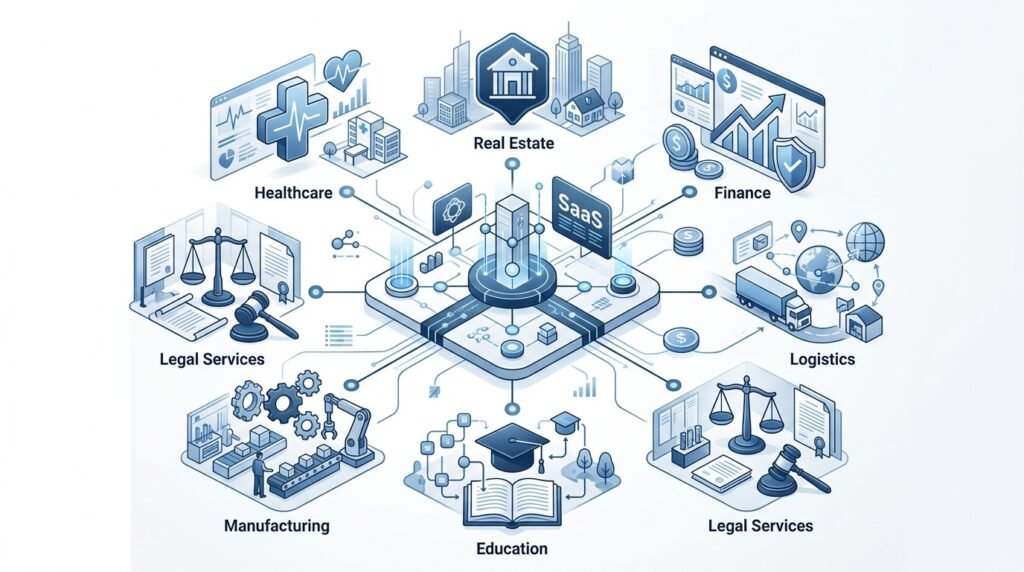
Instead of building software for “businesses,” a vertical SaaS company may build specifically for:
- Healthcare providers
- Real estate companies
- Construction businesses
- Legal firms
- Logistics companies
- Financial services
- Manufacturing
- Education
- Hospitality
The advantage is specialization.
A vertical platform can understand industry-specific terminology, workflows, compliance requirements, reporting needs, and customer problems much better than a generic platform.
Industry analysis for 2026 continues to identify vertical specialization as one of the important directions for SaaS growth.
For marketers, this creates another opportunity.
A vertical SaaS product can build highly targeted search visibility around specific problems instead of competing for extremely broad keywords.
For example, instead of targeting:
“CRM software”
a company might target:
“CRM software for commercial real estate teams”
or:
“CRM software for SaaS sales teams.”
The second approach may have a smaller audience, but the audience can be substantially more relevant.
That is where strong SaaS SEO becomes valuable.
5. SaaS SEO Is Becoming More Intent-Driven
Publishing hundreds of generic blog posts is not a reliable SaaS growth strategy.
Search engines are becoming better at understanding context, intent, entities, and relationships between topics.
At the same time, SaaS buyers are becoming more sophisticated.
A buyer may search for:
- A specific software category
- A problem they need to solve
- Alternatives to an existing tool
- Competitor comparisons
- Pricing information
- Integration requirements
- Industry-specific solutions
- Implementation guides
- Reviews and case studies
That means SaaS content should cover the entire decision journey.
A strong SaaS content strategy can include:
Awareness Content
Educational content that explains a problem.
Consideration Content
Comparisons, alternatives, guides, and solution-focused articles.
Decision Content
Pricing, case studies, product comparisons, implementation information, and product-focused pages.
Retention Content
Tutorials, integrations, advanced workflows, and customer education.
The objective is not simply traffic.
The objective is qualified organic traffic that can eventually become trials, demos, signups, and revenue.
That is why a data-driven SaaS SEO strategy should connect keyword research with business intent rather than treating search volume as the only metric.
6. Authority and Backlinks Still Matter
AI has changed search, but it has not eliminated the importance of authority.
SaaS companies still need credible websites, trustworthy content, relevant mentions, and strong links to compete in difficult search results.
The difference is that link building should be more strategic.
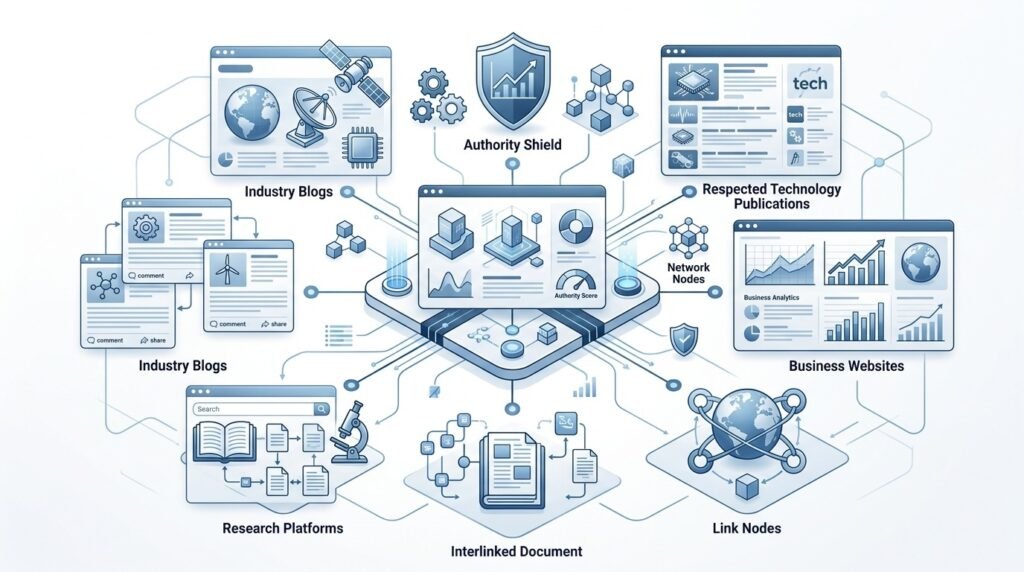
A random backlink from an unrelated website is not the same as a relevant editorial mention from a respected technology publication.
For SaaS brands, effective link acquisition can focus on:
- SaaS publications
- Technology websites
- Business publications
- Industry-specific publications
- Relevant software directories
- Expert contributions
- Data-driven digital PR
- Original research
- Expert commentary
- High-quality guest content
Saasivo specifically positions high-quality manual backlinks from technology and SaaS websites as part of its organic growth approach, while stating that it avoids PBNs and spam tactics.
The key principle is simple:
Build links that strengthen both authority and relevance.
A backlink should ideally help a search engine understand why your website deserves to rank while also putting the brand in front of a relevant audience.
7. Cybersecurity Will Become a Product Differentiator
Security has always mattered in SaaS.
In 2026, however, it is becoming increasingly difficult to treat security as a checkbox.
AI introduces new risks involving data access, automated actions, identity, integrations, and autonomous workflows.
Organizations are increasingly concerned about AI-related security risks, while enterprise environments are also dealing with AI agents that operate differently from traditional human users.
For SaaS vendors, security can therefore become part of the product’s competitive positioning.
Customers increasingly want to know:
- Where is our data stored?
- Who can access it?
- What happens to our data when AI features are used?
- What permissions do AI agents have?
- Can activity be audited?
- What happens if an AI workflow makes an incorrect decision?
- How is sensitive information protected?
SaaS companies that communicate these answers clearly can reduce friction during enterprise sales.
Security is no longer just an IT department concern.
It is increasingly a marketing, sales, and product issue.
8. Product-Led Growth Needs Better Conversion Experiences
Product-led growth, or PLG, remains important because SaaS buyers increasingly want to experience software before committing to a sales conversation.
But simply offering a free trial does not create product-led growth.
The real challenge is getting users to the first meaningful value moment as quickly as possible.
A SaaS company should know:
- What action indicates activation?
- How long does it take users to reach that point?
- Where do users abandon the onboarding process?
- Which features are associated with retention?
- Which users are most likely to convert?
This connects SaaS SEO with conversion rate optimization.
Getting 100,000 visitors is meaningless if the product converts poorly.
Conversely, a smaller amount of highly relevant organic traffic can be extremely valuable if visitors understand the product, trust the company, and reach the right conversion point.
That is why modern SaaS growth should connect:
Search → Landing Page → Product Experience → Activation → Conversion → Retention
rather than treating SEO as an isolated traffic-generation channel.
9. The Real SaaS Advantage Will Be Measurable Business Outcomes
Perhaps the biggest SaaS trend of 2026 is not technology.
It is a change in what customers expect.
Customers are becoming less interested in impressive feature lists and more interested in measurable outcomes.
They want to know:
- How much time will this save?
- How much revenue can this generate?
- How many manual tasks can it eliminate?
- How quickly can we implement it?
- What will the total cost be?
- Can we measure the ROI?
This is particularly important as AI changes SaaS pricing and makes software consumption more variable.
The SaaS companies most likely to stand out will be those that connect product capabilities with business results.
That changes marketing too.
Instead of writing:
“Our platform has advanced AI automation.”
A stronger message is:
“Automate repetitive customer-support workflows and reduce manual ticket handling.”
The second statement communicates value.
And value is easier to sell than technology alone.
What Should SaaS Companies Do in 2026?
Following every trend is a mistake.
A SaaS company does not need to launch an AI agent, switch to usage-based pricing, enter a vertical market, publish 500 blog posts, and rebuild its entire website simultaneously.
That creates complexity rather than growth.
Instead, SaaS companies should identify the trends that directly affect their business model.
A practical 2026 roadmap looks like this:
Step 1: Identify the Highest-Value Customer Problems
Find the problems customers are already paying to solve.
Step 2: Map AI Opportunities
Determine where AI can genuinely improve the workflow rather than simply adding another feature.
Step 3: Review Pricing
Make sure pricing reflects both customer value and the cost of AI-driven usage.
Step 4: Build Search Authority
Create content around high-intent topics and earn relevant, authoritative backlinks.
Step 5: Improve Conversion
Turn organic traffic into trials, demos, signups, and qualified leads.
Step 6: Measure Revenue Impact
Track more than rankings and traffic.
Measure:
Organic traffic → Leads → Trials → Activated users → Customers → Revenue
That is the difference between SEO activity and a genuine SaaS growth strategy.
Final Thoughts
SaaS in 2026 is becoming more competitive, more intelligent, and more outcome-driven.
AI-native architecture is changing how products are built. Agentic AI is changing how software performs work. Usage-based and hybrid pricing models are challenging traditional subscriptions. Vertical SaaS is creating deeper specialization. Security and governance are becoming increasingly important, while SaaS SEO is moving toward stronger search intent, authority, and conversion alignment.
But there is one mistake SaaS companies should avoid:
Chasing trends without a business reason.
AI is not a strategy.
Publishing more content is not a strategy.
Getting more backlinks is not a strategy.
A successful SaaS growth strategy connects technology, product value, search visibility, authority, conversion, and revenue.
The companies that understand that connection will have a much better chance of turning 2026’s rapid SaaS changes into sustainable growth.
For SaaS brands looking to build stronger organic visibility, improve search authority, and turn high-intent traffic into measurable growth, a focused SaaS SEO strategy can provide the foundation for long-term acquisition.
The future of SaaS will not belong simply to the companies with the most features. It will belong to the companies that create the most measurable value—and make that value easy for customers to discover.