
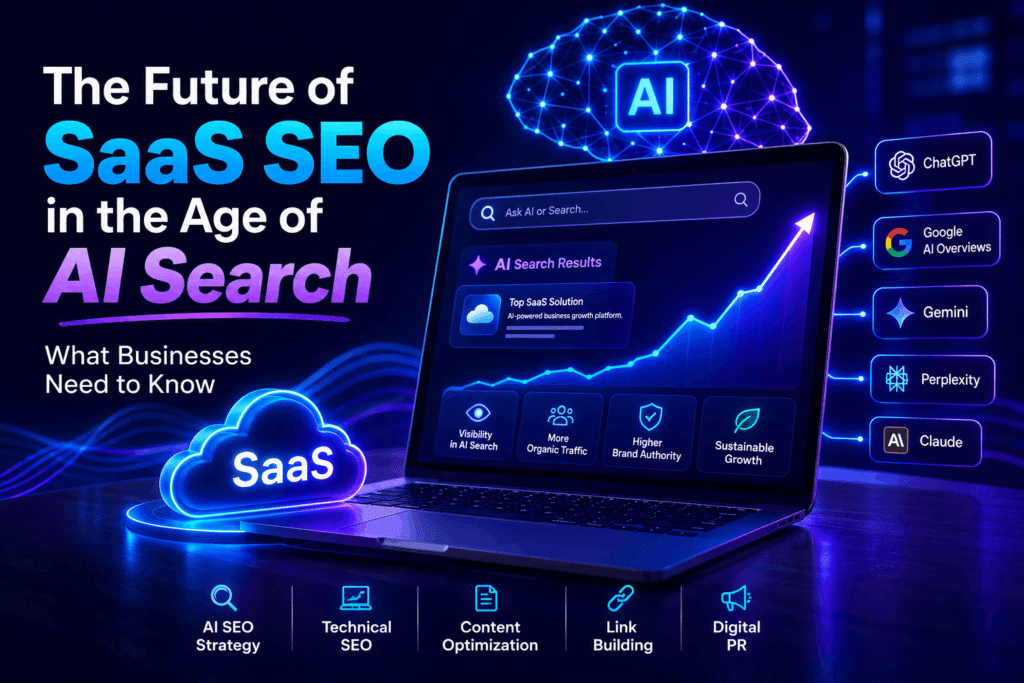
For fifteen years, SaaS marketers followed a fairly predictable playbook: pick a keyword, write a page that answers it better than anyone else, build a few links, wait for Google to notice. That playbook still works, technically. But it’s not doing what it used to.
Type a question into Google today and there’s a good chance you get your answer before you click anything. ChatGPT, Perplexity, Gemini, and Google’s own AI Overviews are quietly rerouting the way people find software, compare tools, and make buying decisions. A prospect researching “best project management tool for a 10-person agency” might never see your homepage at all — they’ll see a synthesized answer that mentions you, or worse, doesn’t.
This isn’t the death of SEO that some LinkedIn posts want you to believe. It’s a shift in what SEO is actually for.
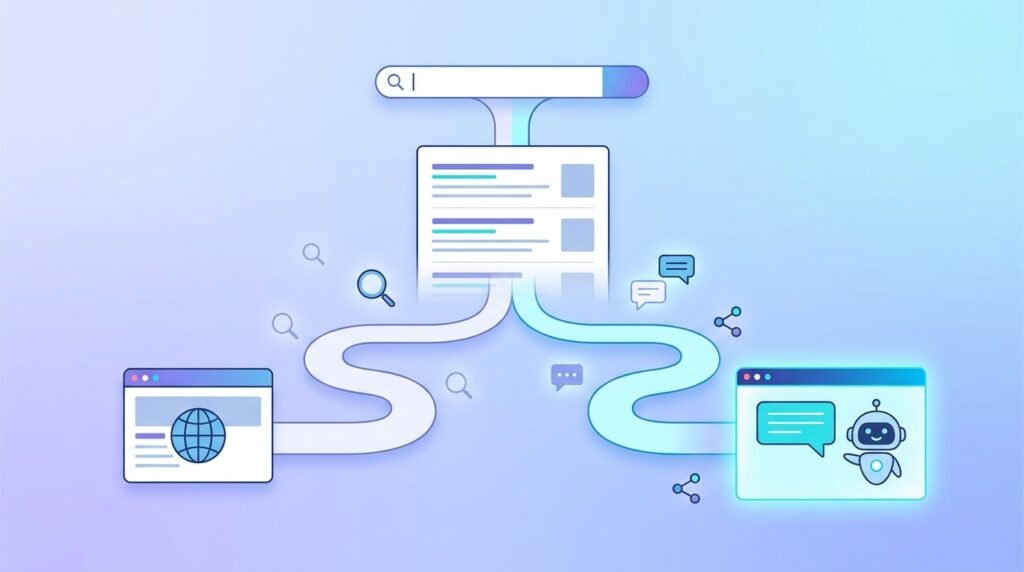
Search Traffic Isn’t Disappearing — It’s Splitting
Organic traffic to SaaS blogs hasn’t collapsed overnight, but the shape of it has changed. A chunk of the low-intent, informational searches (“what is a CRM”, “how does SSO work”) now get answered directly by AI systems without a click. Meanwhile, high-intent searches — the ones closer to a purchase decision — are still driving people to actual websites, because AI tools are cautious about recommending a specific vendor for something transactional.
The practical takeaway: chasing top-of-funnel keyword volume the way we did in 2019 is a shrinking game. The traffic that’s left is more qualified, but there’s less of it up for grabs through content alone.
Being Cited Matters as Much as Being Ranked
Here’s the part that catches SaaS teams off guard. When someone asks an AI assistant to recommend tools, the assistant isn’t crawling live search results in real time for most answers — it’s drawing on patterns learned from training data, plus whatever it retrieves during that session. Which means your brand’s presence across the web — review sites, comparison pages, Reddit threads, YouTube reviews, documentation, other people’s blog posts that mention you — carries more weight than it used to.
A single well-optimized landing page targeting “best email marketing software” isn’t going to get you cited by an AI model. Consistent, credible mentions across many sources will. This is closer to digital PR and brand-building than classic on-page SEO, and most SaaS marketing teams aren’t structured for it yet.
Structured, Answerable Content Still Wins
AI systems favor content that’s easy to extract and easy to trust. That means:
- Clear, direct answers near the top of a page, not buried under three paragraphs of preamble
- Original data, benchmarks, or opinions that can’t be found word-for-word on ten other sites
- Content written by someone with actual expertise, with a name and credibility attached to it
- Pages that don’t try to rank for fifteen keywords at once with vague, padded copy
Thin content optimized purely for keyword density is going to age badly. If an AI model can already answer the question better than your page can, your page needs to offer something the model can’t — a specific experience, a real number, a strong point of view.
Product-Led Content Has an Advantage
SaaS companies have something most publishers don’t: a product people actually use. Content built around real usage data, customer outcomes, or genuinely novel workflows tends to survive the AI-answer squeeze better than generic “10 tips for X” posts, because it’s harder to summarize away and harder to replicate.
If your content strategy could be copy-pasted by a competitor with a different logo, that’s a sign it won’t hold up well going forward.
What Actually Changes for SaaS Teams
- Comparison and alternative pages get more important, not less. “X vs Y” and “best alternatives to X” content is exactly the kind of decision-stage query AI models still send real clicks toward.
- Community and third-party presence becomes a ranking input in a new way. Being mentioned favorably on G2, Reddit, or niche forums feeds both traditional search and AI training/retrieval.
- Technical SEO fundamentals don’t go away. Crawlability, site speed, and clean structured data still matter — AI crawlers and traditional bots both need to access and parse your content.
- Brand consistency across the web matters more than any single backlink. How your product is described matters more than how many times it’s linked.
The Honest Take
Nobody has this fully figured out yet, including the AI companies building these search experiences. SaaS SEO isn’t ending, but the teams that keep treating it as a content-volume game are going to feel the squeeze first. The teams that shift toward being genuinely citable — through real expertise, real data, and a real presence across the web, not just their own domain — are the ones who’ll come out ahead.
The keyword-stuffed blog post isn’t coming back. Build for trust, not just for rankings.